Introduction
Let’s be honest. The mobile app market is overcrowded. Every day, thousands of apps hit the stores, but most of them fail within the first few months. Why? Because they don’t give users what they actually want.
Users are no longer satisfied with static, text-heavy applications. They want dynamic experiences. They want to watch videos, listen to audio, and interact with content, all within the same app, without switching between multiple platforms.
This is exactly where an application mobile dualmedia comes into the picture.
If you’ve been searching for a comprehensive guide that explains what dual media apps are, how they work, what they cost, and whether they’re worth building, you’ve landed in the right place. This isn’t just another generic article. I’ve analyzed the top-ranking guides, identified their gaps, and built something that actually delivers value.
Let’s get into it.
What Exactly Is an Application Mobile DualMedia?
Before we dive into the technicalities, let’s clarify what we’re actually talking about.
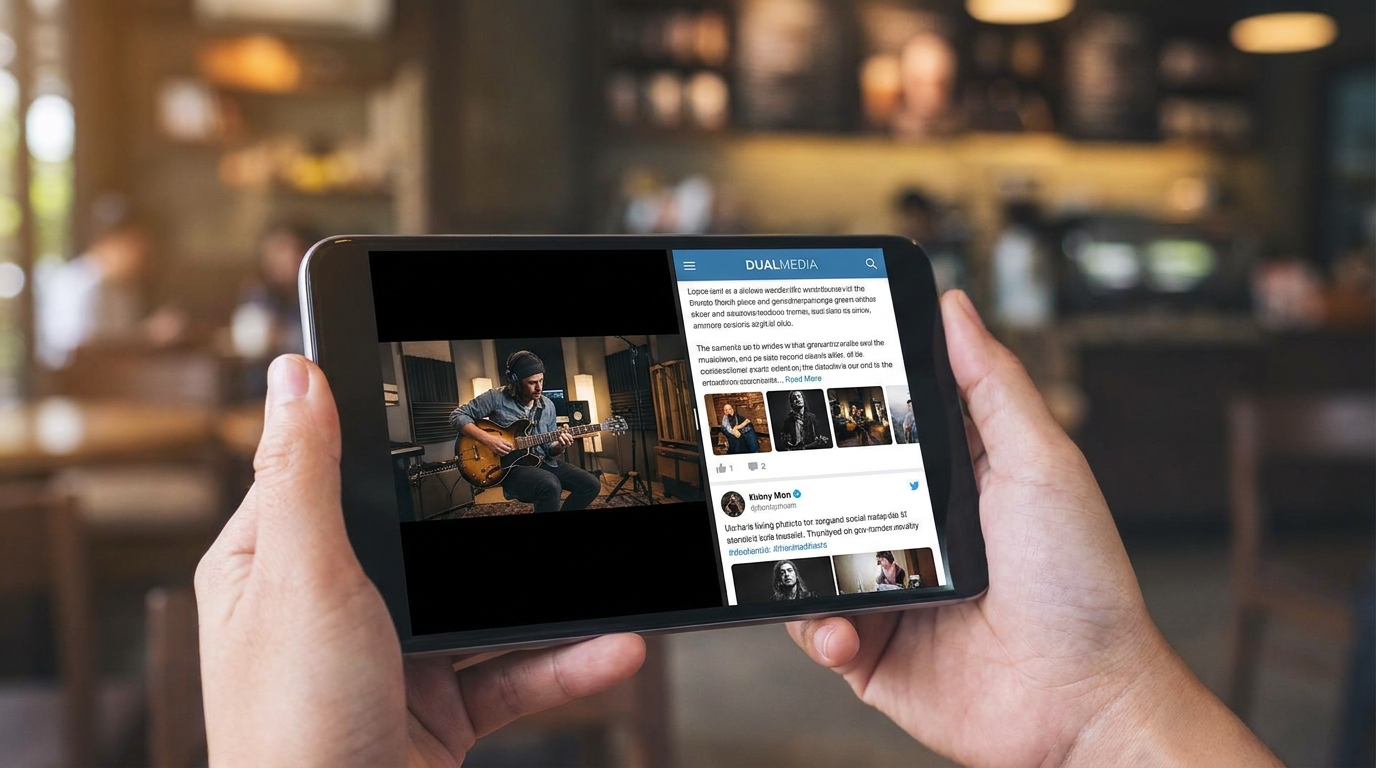
An application mobile dualmedia is essentially a mobile app that handles more than one type of media format within a single interface. Most commonly, this means video and audio, but it can also include text, images, animations, and interactive elements.
Think about it this way: traditional apps are built around a single purpose. A video streaming app only thinks about video. A music app only thinks about audio. A news app only thinks about text. But a dual media app is architected from day one to handle multiple formats seamlessly.
Here’s the key distinction: users can switch between formats without any interruption. Someone watching a tutorial video can switch to audio-only mode while commuting. A listener enjoying a podcast can switch to video when they want to see the host’s expressions. No restart, no loading screen, no hassle.
Spotify is a great example. It started as an audio app, but now it incorporates video podcasts too. The app doesn’t force you to choose one format over the other. Everything coexists in one place.
That’s the magic of a dual media mobile application.
Why Businesses Are Rushing to Build DualMedia Apps
The numbers don’t lie. User behavior has shifted dramatically over the past few years. People consume content differently now. They want flexibility. They want choice. And they want it all in one place.
Here are some compelling reasons why smart businesses are investing in application mobile dualmedia:
Users stay longer on the platform. When someone can toggle between video and audio within the same app, they keep using it even during commutes or when their eyes are occupied. More time in the app means more revenue opportunities, plain and simple.
Churn rates drop significantly. A user who signs up for video content and discovers the podcast section now has two reasons to stay subscribed. One reason is easy to lose. Two reasons are much harder to lose.
Multiple revenue streams open up. Video content generates ad revenue. Audio content generates subscription revenue. Live events generate ticket sales. Running all three from one platform means that if one revenue stream has a slow month, the others cover it.
You own the relationship with your audience. When you post content on YouTube or Spotify, you’re essentially giving those platforms ownership of your audience. With your own application mobile dualmedia, you control the user data, the experience, and the monetization completely.
One app instead of three. Building separate applications for video, audio, and live content costs more money and confuses users. One unified platform does everything and costs less to maintain long-term.
How Application Mobile DualMedia Actually Works
Now let’s get technical, but I’ll keep it simple. I know not everyone reading this is a developer, so I’ll explain both the high-level concept and the nitty-gritty details.
The Frontend Layer
The frontend is what users actually see and interact with. When building a dual media mobile application, you have several framework choices.
Flutter is currently the most popular option. One codebase runs on both iPhone and Android, which saves development time and money. The media players perform well, and overall performance is solid.
React Native is another excellent choice, especially if your development team already knows JavaScript. It works fine for most dual media projects.
If you’re building exclusively for iPhone, Swift offers superior performance and complete tools for Apple media. For Android only, Kotlin with ExoPlayer is the standard approach.
The key point is that a dual media app interface has more states than a regular app: full-display video mode, audio mini-player, live stream overlay, download manager, and more. Every state needs to be planned carefully so transitions feel seamless.
The Backend Layer
The backend handles all the app’s logic. Most modern dual media apps use Node.js or Python for APIs, PostgreSQL or MongoDB for data storage, and Redis for caching to keep everything fast.
Cloud infrastructure is typically built on AWS. S3 stores media files, CloudFront delivers them quickly to users worldwide through CDN servers, and Firebase adds real-time features like live chat and push notifications.
Media Processing
This is where things get interesting. When someone uploads a video, the system doesn’t just store it. It converts it to multiple quality levels, creates thumbnail images, and sometimes automatically generates an audio-only version.
FFmpeg is the main tool used for this. It’s open source and used by almost every major media platform out there. For live streaming, tools like Wowza handle real-time encoding and broadcast it to viewers.
Real-Time Features
WebSockets are used for live comments, instant notifications, and synced playback. The connection between the server and the app stays alive, so data moves instantly without requiring the user to refresh.
Key Features Your Application Mobile DualMedia Must Have
Not every app with videos qualifies as a dual media app. There’s more to it than just throwing some media files into a mobile interface.
1. Multi-Format Support
The app must support various video codecs (MP4, MKV) and audio formats (MP3, AAC). A single media player component should handle everything and switch seamlessly based on what the user is watching or listening to.
2. Seamless Format Switching
This is the signature feature that makes a dual media app different. The ability to switch between video and audio modes without interruption sets it apart from standard media players. No restarting, no loading screens, no frustration.
3. Cross-Platform Performance
The app should work consistently across iOS and Android, different screen sizes, and tablets. Flutter makes this easier with one shared codebase, ensuring the experience feels consistent everywhere.
4. Offline Downloads
Content should be available on devices for offline watching or listening. Files are stored locally, encrypted, and expire based on licensing rules. This is crucial for users who travel frequently or have limited data plans.
5. Personalized Recommendations
The app should track what users watch, what they skip, and how much time they spend on content. Using this data, it recommends what they’re likely to enjoy next. This keeps users coming back without additional marketing effort.
6. Real-Time Interaction
Live chat, reactions, and streaming features are non-negotiable in 2026. Users want to feel involved, not just passive consumers.
7. Push Notifications
Timely notifications about new content, live events, and replies to comments significantly boost user engagement. The key is timing them well so they feel helpful rather than annoying.
What It Actually Costs to Build an Application Mobile DualMedia
Let’s talk about money. This is the question everyone asks but few guides answer honestly.
Factors That Affect the Price
Several variables determine the final cost: the number of features, whether you’re building for iOS only or both platforms, backend technology complexity, whether you require AI recommendations, the location of your development team, and ongoing maintenance requirements.
Realistic Price Ranges
A basic app that incorporates video, audio, user account registration, and basic subscriptions will typically cost between $25,000 and $60,000.
A more conventional app with features like live streaming, offline downloads, push notifications, and monetization tools will range from $60,000 to $100,000.
A full platform with AI suggestions, creator tools, analytics dashboards, and admin panels will cost anywhere from $120,000 to $250,000+.
After launch, you should budget around 15 to 20 percent of the initial build cost per year for maintenance, bug fixes, updates, and scaling.
Is It Worth the Investment?
Here’s where things get interesting. A platform with 50,000 paying customers at $9.99 monthly generates roughly **$6 million in annual recurring revenue** from subscriptions alone. Add advertising and premium content to that, and the math becomes very compelling.
For businesses serious about building an audience, the return on investment is substantial. However, for startups with limited budgets, starting with an MVP (Minimum Viable Product) that covers the core use case is a smarter approach. Get it to market, see how users respond, and build from there.
Common Mistakes to Avoid When Building Your App
I’ve seen countless projects fail because developers ignored these fundamental issues. Here are the most common mistakes and how to avoid them.
Overloading the App with Media
More videos don’t necessarily mean a better experience. Too much media content slows everything down and frustrates users. Quality over quantity, always.
Ignoring Performance Optimization
Heavy apps equal frustrated users. If your app takes more than two seconds to load, people will abandon it. Optimize media file sizes, use appropriate codecs, and always leverage CDN caching.
Weak Backend Infrastructure
If your backend can’t handle traffic spikes, your app will crash at the worst possible moment. Always configure automatic scaling from day one. When a popular creator starts streaming and 10,000 users hit the app simultaneously, everything should work without manual intervention.
No Content Strategy
Media without purpose doesn’t work. Before you build anything, understand what your users actually need. Discuss with real people from your target audience. See what competitors are doing well and where they’re falling short. This step saves expensive rework later.
Skipping Thorough Testing
Every media format needs to be tested on every supported device and operating system. Performance tests should simulate thousands of users simultaneously. Security tests need to cover login, payments, and content access. This phase takes longer than most clients expect, but it prevents serious problems after launch.
The Technology Stack That Works Best
Based on extensive research and real-world projects, here’s what actually works.
Framework Choices
Flutter is recommended for most projects. One codebase runs on iOS and Android, it has strong media support, and performance is excellent.
React Native is a good alternative when your team is already familiar with JavaScript.
Swift and Kotlin are designed for single platforms and offer maximum performance, but they require separate codebases.
Backend Technologies
Node.js or Python for APIs. PostgreSQL for relational data. MongoDB for flexible data structures. Redis for caching. Docker and Kubernetes for deployment and scaling.
Cloud Infrastructure
AWS S3 for file storage. CloudFront or Cloudflare for CDN delivery. Firebase for real-time features and notifications. PostgreSQL on AWS RDS for managed database hosting.
Security Measures
TLS 1.3 to protect data in transit. AES-256 encryption for stored files. OAuth 2.0 for sign-in. Widevine for Android DRM and FairPlay for iOS DRM to protect premium content.
Performance Optimization
Adaptive bitrate streaming adjusts quality based on network conditions. Lazy loading prevents the app from loading items users haven’t accessed yet. WebP format loads images faster than JPEG. CDN caching delivers content from nearby servers rather than across the world.
How to Choose the Right Development Partner
This decision can make or break your project. Here’s what to look for:
Red Flags to Avoid
- Teams that promise unrealistically low prices
- Companies that can’t show you working examples of similar apps
- Developers who don’t ask questions about your users and goals
- Agencies that propose generic solutions without customization
- Teams that can’t explain how they handle performance optimization
Green Flags to Look For
- A strong portfolio with real project experience
- Clear, transparent communication from the start
- Teams that ask detailed questions about your requirements
- Companies that explain their development process clearly
- Partners who show you working software throughout the project, not just at the end
Questions to Ask Before Hiring
- How do you handle performance optimization for media-heavy apps?
- What’s your approach to scalability?
- How do you manage security and data privacy?
- What’s your process for testing and quality assurance?
- How do you handle post-launch support and maintenance?
Future Trends That Will Shape Application Mobile DualMedia
The landscape is evolving rapidly. Here’s what’s coming in the next few years.
AI-Powered Personalization
We’re already seeing apps that analyze user behavior to deliver personalized content. The next generation will automatically generate subtitles, provide live translation, offer voice search, and create content summaries. In the near future, you’ll be able to ask the app to summarize a long video or translate a podcast into your language in real time.
AR and VR Integration
Phones are becoming powerful enough to run basic AR and VR experiences without additional hardware. Future dual media apps will let users watch events virtually, try products in AR before buying, and join interactive live experiences through their camera. This isn’t mainstream yet, but it’s coming faster than you think.
5G Mobile Streaming
5G means streaming 4K video without buffering becomes normal. Live stream delays drop below 100 milliseconds, making truly interactive live experiences possible. Lossless audio over mobile becomes practical. The bandwidth constraints that have limited mobile media for years are starting to disappear.
Content Ownership with Blockchain
Blockchain-based ownership is still early, but the concept is compelling. Instead of just streaming access, users could actually own a piece of content. Smart contracts pay creators automatically every time content is sold or shared. Some media companies are already experimenting with this.
Voice and Gesture Controls
Users increasingly want hands-free interaction. Voice commands and gesture controls will become standard features in next-generation dual media applications.
Decision Framework: Should You Build an Application Mobile DualMedia?
Before you invest significant resources, work through this decision matrix.
You Should Consider Building If:
- You have existing content that fits multiple formats
- Your audience has shown interest in different media types
- You currently manage multiple platforms (YouTube, Spotify, etc.)
- You want to own the relationship with your audience
- You have a realistic budget of at least $25,000 for an MVP
- You’re willing to commit to ongoing maintenance and updates
You Should Wait Or Consider Alternatives If:
- You’re testing a completely unproven concept
- Your budget is under $15,000
- You don’t have content ready to publish
- You’re not sure what your users actually want
- You’re unable to commit to post-launch support
Alternative Options to Consider
If building from scratch isn’t feasible, consider these options:
- Progressive Web Apps (PWA): For simple media experiences
- White-label solutions: Pre-built platforms you can customize
- Existing platforms: YouTube, Spotify, or podcast hosting services
- MVP approach: Build the core features first, add complexity later
Read” The Ultimate Tech Hacks PBLinuxGaming Guide
Final Thoughts
The story of mobile apps in 2026 isn’t about one new TikTok or one new Instagram. It’s about a fundamental category reset. Application mobile dualmedia has pulled productivity, utilities, and research tools into the foreground while pushing older “innovative app” lists into irrelevance.
If you want to stay current, the easy move is to build one app that does everything well rather than multiple apps that do one thing adequately. One unified platform that handles video, audio, live streaming, and interactive content will serve your audience better and cost less to maintain long-term.
The real measure of a successful dual media app in 2026 is whether it saves your users time on tasks they perform every week. Most apps won’t. A handful will. Those are the ones that matter.
Building a dual media app isn’t just about technology. It’s about understanding user behavior, creating seamless experiences, and building a platform that adapts to how people actually consume content today. The technology is mature enough to support this vision. The costs are justified by the revenue potential. And the user behavior trends are clearly pointing in this direction.
If you’re thinking about building an application mobile dualmedia, the time to start is now. The competitive advantage lies in being early while this shift is still happening. The technical complexity is manageable with the right team. And the rewards for getting it right are substantial.
Your users aren’t waiting. They’re already looking for better, more flexible ways to consume content. Give them what they want, and they’ll reward you with their attention, engagement, and loyalty.
That’s the real power of an application mobile dualmedia. And that’s why it matters more than ever in 2026.
FAQs
What is an application mobile dualmedia?
It’s a mobile app that combines traditional functionality with multiple media formats like video, audio, and interactive content in a single seamless experience. Users can switch between formats without leaving the app or interrupting their experience.
How much does it cost to build a dual media app?
A basic version starts around $25,000 to $50,000. A full platform with live streaming, AI features, and monetization tools runs from $80,000 to $200,000, depending on scope and features. Annual maintenance typically costs 15-20% of the initial build.
Which technology stack works best for dual media apps?
Flutter for cross-platform development, Node.js or Python for backend APIs, PostgreSQL or MongoDB for databases, AWS for cloud infrastructure, and Firebase for real-time features. These are the most common and well-tested choices for this type of project.
Can a startup afford to build a dual media app?
Yes, but start with an MVP that covers the core use case. Get it to market, see how users respond, and build from there. You don’t need the full platform on day one. A focused MVP with essential features is a more practical approach.
How long does it take to build an application mobile dualmedia?
A focused MVP typically takes three to five months. A full platform takes eight to fourteen months. With agile development, you get a working version much earlier and can start testing with real users before everything is finished.
What are the biggest challenges in dual media app development?
Performance optimization is the top challenge. Ensuring smooth playback across different devices and network conditions requires careful planning. Device compatibility, especially on Android, is another significant challenge. Content management complexity and security also require serious attention.
How do dual media apps make money?
Through multiple revenue streams: subscription models, advertising, pay-per-view for premium events, creator revenue sharing, and sometimes in-app purchases. A well-designed app can run several of these simultaneously.