
Introduction
Walk into any modern office, and you will notice something alarming: the buzz is missing. Employees sit in rows of desks, eyes glued to screens, but something feels disconnected. Engagement surveys paint a grim picture, and HR departments scramble to find solutions that actually work.
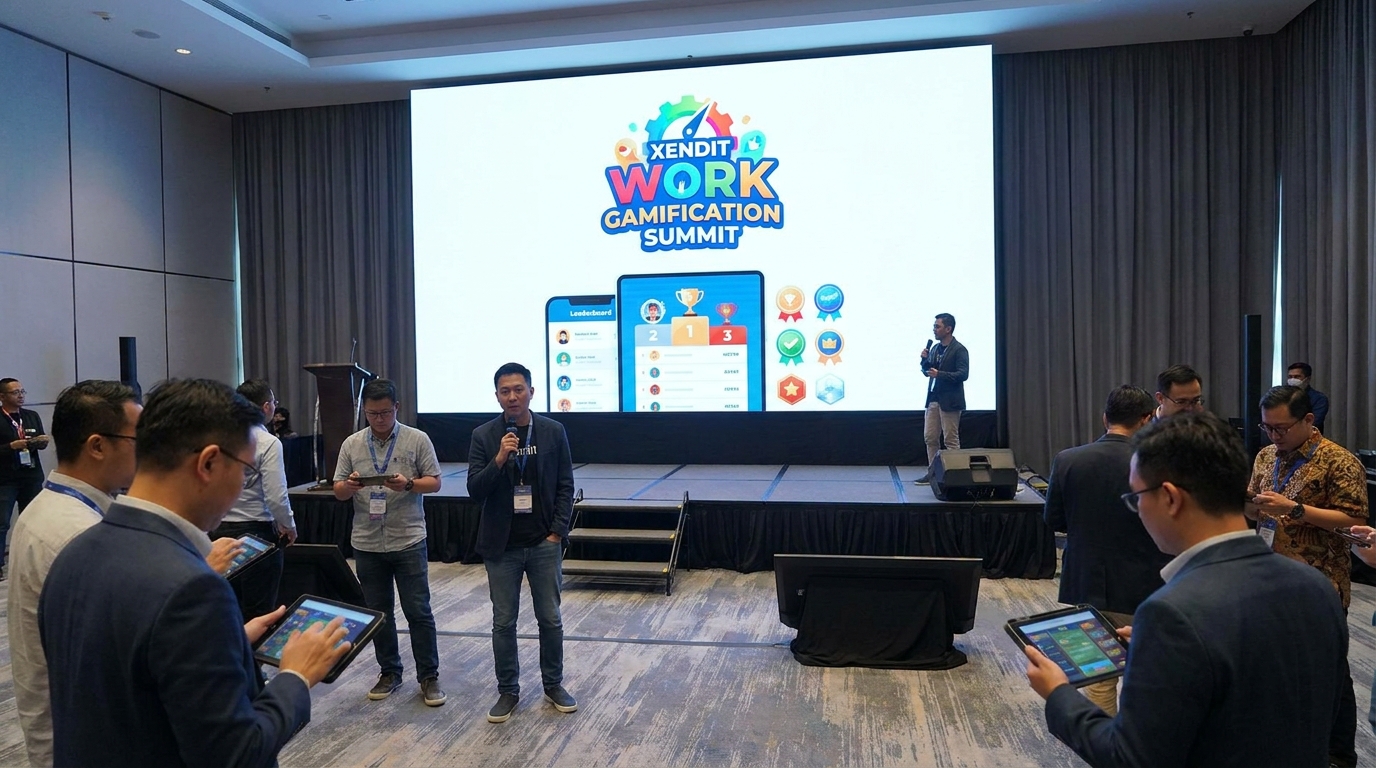
Xendit, a leading Southeast Asian fintech company, faced this exact challenge. The result was the Xendit Work GamificationSummit — not just another corporate event, but a fundamental shift in how work gets done.
Traditional approaches to motivation and recognition simply aren’t cutting it anymore. Annual performance reviews, sporadic bonuses, and generic team-building exercises cannot compete with the immersive, rewarding experiences that employees voluntarily engage with in their personal lives. Think about it: people spend hours playing video games, learning new skills through Duolingo, or tracking their fitness on apps like Strava. Why? Because these platforms have cracked the code on motivation.
The Xendit Work GamificationSummit emerged as the answer to this disconnect. By applying the same psychological principles that make games irresistible, Xendit transformed ordinary work routines into meaningful journeys filled with challenges, milestones, and visible progress. The results? Game-changing. Employee engagement skyrocketed, productivity metrics improved across the board, and the company witnessed something unexpected: employees actually started enjoying their work more.
This comprehensive guide dives deep into everything you need to know about the Xendit Work GamificationSummit. We will explore the psychology behind gamification, analyze Xendit’s specific implementation strategies, examine the measurable results they achieved, and provide you with actionable steps to replicate their success. Unlike most articles that just scratch the surface, we will cover the practical aspects that truly matter: budgeting, tool selection, crisis management, industry-specific adaptations, and sustainable long-term strategies.
Whether you are an HR professional, team leader, product manager, or business owner, this guide will equip you with the knowledge and tools to revolutionize your workplace culture. The future of work is not just about technology or processes—it is about people feeling genuinely motivated and connected to their purpose.
Understanding the Xendit Work GamificationSummit: More Than Just an Event
The Xendit Work GamificationSummit is not a standard corporate event where executives gather to listen to motivational speeches and then forget everything the next day. It represents a strategic initiative designed to fundamentally reshape how employees interact with their daily responsibilities.
Xendit, known for its innovative payment solutions across Indonesia, Philippines, Malaysia, and other Southeast Asian markets, realized that scaling a business requires more than just technological infrastructure. Growing from a bootstrapped startup to a regional fintech leader meant maintaining culture across expanding teams. The summit became the vehicle for this cultural evolution.
At its core, the Xendit Work GamificationSummit brings together employees, industry experts, and thought leaders to explore the intersection of game design and workplace productivity. Attendees don’t just listen to presentations; they participate in hands-on workshops, design challenges, and collaborative sessions where theoretical concepts transform into practical applications.
The summit focuses on several interconnected pillars: transforming mundane tasks into engaging challenges, designing recognition systems that make employees feel valued, implementing goal-tracking mechanisms that make progress visible, and creating learning experiences that feel more like exploration than obligation. Each of these pillars addresses a specific pain point that modern organizations face.
What makes this summit truly unique is its practical orientation. Participants leave with actual tools: pilot checklists, measurement dashboards, feedback templates, and implementation roadmaps. This focus on actionable outcomes sets it apart from conferences that leave attendees inspired but directionless. Xendit understood that knowledge alone doesn’t drive change—applied knowledge does.
The summit also serves as a living laboratory where Xendit experiments with new gamification techniques before rolling them out company-wide. This creates a safe space for innovation where failure is seen as learning, not as something to be hidden or punished. The company’s willingness to iterate and improve based on real-world feedback has been instrumental to its success.
For organizations looking to replicate this approach, the lesson is clear: start with a clear vision of what you want to achieve, involve employees in the design process, and commit to continuous improvement rather than searching for a perfect solution from day one.
The Science of Motivation: Why Gamification Actually Works
Gamification isn’t magic. It’s rooted in established psychological principles that have been studied and validated over decades. Understanding the science behind it is essential for implementing effective programs rather than just slapping points and badges onto existing processes.
Self-Determination Theory, developed by psychologists Edward Deci and Richard Ryan, provides the foundational framework. According to this theory, human motivation thrives when three core psychological needs are satisfied: autonomy (the feeling of having choice and control), competence (the experience of mastering skills and achieving goals), and relatedness (the sense of connection with others).
Consider how games satisfy these needs. Players choose their own paths through a game world—that’s autonomy. They gradually improve their skills, progressing from novice to expert—that’s competence. They collaborate with friends, compete on leaderboards, and share achievements—that’s relatedness. By deliberately designing work experiences that fulfill these needs, organizations can tap into the same motivational forces that make gaming so compelling.
The neuroscience behind gamification adds another layer of understanding. When people receive rewards, especially unpredictable ones, their brains release dopamine, a neurotransmitter associated with pleasure and anticipation. This is why variable rewards—surprise bonuses, unexpected recognition, random achievements—are particularly powerful for sustaining engagement. The Xendit Work GamificationSummit emphasizes the strategic use of such mechanics to maintain momentum over time.
Researchers have conducted extensive studies on workplace gamification with compelling results. In controlled experiments, employees who experienced gamified interventions showed significantly higher motivation levels across all dimensions: autonomy, competence, relatedness, and overall work satisfaction. Engagement scores improved substantially, and participants reported feeling more connected to their organizations. Perhaps most importantly, these psychological benefits translated into measurable performance gains: faster task completion, higher quality outputs, and reduced turnover intentions.
Intrinsic motivation—doing something because you genuinely enjoy it—is more powerful and sustainable than extrinsic motivation, which relies on external rewards like money or recognition. However, gamification doesn’t ignore external rewards; it uses them strategically to support intrinsic motivation. For example, points and badges can provide the external validation that helps people feel competent, which then fuels their internal desire to keep improving.
The Xendit Work GamificationSummit places particular emphasis on balancing intrinsic and extrinsic motivational factors. Participants learn that rewarding effort and progress—not just outcomes—is crucial for maintaining engagement across diverse employee populations. Some individuals thrive on competition, while others prefer collaboration or personal achievement. Effective gamification accommodates these differences rather than forcing everyone into the same mold.
Xendit’s Gamification Framework: The 4 Pillars of Success
Xendit didn’t just randomly add game elements to their workplace; they developed a structured framework built on four interconnected pillars. Each pillar addresses a specific aspect of the employee experience, and together they create a comprehensive system that drives sustained engagement.
Pillar 1: Task Completion with Game Mechanics
Traditional project management tools present work as endless to-do lists—functional but uninspiring. Xendit transformed this experience by integrating game mechanics directly into their workflow platforms. Employees now see progress bars fill up as they complete tasks, earn points for hitting deadlines, and level up as they take on more complex responsibilities.
The psychological effect is significant. Instead of viewing tasks as isolated items to check off, employees perceive them as steps on a journey. Each completed task provides a small sense of accomplishment, creating positive momentum that carries into the next activity. This approach has proven particularly effective for repetitive or routine work that tends to become monotonous.
Practical implementation involves integrating gamification elements with existing tools like project management software, communication platforms, and performance tracking systems. Xendit ensures that the game mechanics feel organic rather than forced, enhancing workflow rather than adding unnecessary friction. The goal is to make the work itself feel rewarding, not to create a separate game that employees play alongside their actual responsibilities.
Pillar 2: Reward Systems and Employee Recognition
Annual awards ceremonies and quarterly bonuses are nice, but they aren’t sufficient for maintaining motivation. Xendit implemented a continuous recognition system where employees earn badges, points, and acknowledgments for consistent performance, collaboration, and contributions.
This system creates several benefits. First, it democratizes recognition by allowing peers to acknowledge each other’s efforts, not just managers. Second, it provides immediate feedback on behaviors that align with company values. Third, it makes invisible contributions visible—the behind-the-scenes work that often goes unnoticed in traditional performance reviews.
Xendit’s recognition program includes both digital rewards (badges, points, leaderboard visibility) and tangible rewards (gift cards, company merchandise, additional time off). The key is variety and unpredictability; employees never know exactly what recognition might come their way, which creates a sense of pleasant anticipation and keeps the system fresh.
Pillar 3: Goal Tracking Through Visible Progression
One of gamification’s greatest strengths is making abstract progress tangible. Instead of vaguely knowing that you are “doing well,” employees see clear indicators of advancement through levels, milestones, and achievement markers.
Xendit applies this principle across multiple contexts: sales pipelines show progress toward targets, product development tracks feature completion, and learning paths display course advancement. This visibility serves two purposes: it gives employees a sense of direction and it provides a source of motivation by showing how far they’ve come.
Pillar 4: Gamified Learning and Development
Training and onboarding often rank among employees’ least favorite activities. Lengthy manuals, boring presentations, and tedious compliance modules create resistance before learning even begins. Xendit completely reimagined this experience by turning learning into an interactive journey.
New hires progress through onboarding levels, earning achievements for completing orientation modules, meeting team members, and successfully handling their first customer interaction. Product training includes quizzes with instant feedback, mastery challenges, and collaborative learning quests where teams compete to answer questions correctly.
The results speak for themselves: faster onboarding times, higher knowledge retention, and positive feedback from employees who genuinely enjoy the learning experience. Even experienced employees participate in learning activities because the gamified structure makes exploration and skill development feel like an engaging challenge rather than a mandatory requirement.
Step-by-Step Implementation Guide: From Idea to 30-Day Pilot
Ideas are abundant; successful execution is rare. Xendit’s approach to implementing gamification follows a disciplined, phased methodology that increases the chances of success while minimizing risk. Here is a comprehensive guide based on their proven framework.
Week 1: Identify the Behavior You Want to Change
Start with a single, specific, measurable behavior. “Improve engagement” is too vague. “Increase the percentage of new hires who complete onboarding within five days” is actionable and testable. Define the current baseline performance and the target improvement. This clarity prevents scope creep and ensures measurable outcomes.
Week 2: Select and Design the Game Mechanic
Choose one primary mechanic that addresses the barrier preventing the desired behavior. Progress bars work well when people don’t know what to do next or feel lost in long processes. Points and rewards address motivation gaps where employees don’t see the value in completing tasks. Leaderboards create healthy competition and visibility. Social recognition works for teams that lack appreciation.
Weeks 3-6: Run a Controlled Pilot
Set up an A/B test with a control group that experiences the process as usual and an experimental group that experiences the gamified version. This comparison is crucial for determining whether improvements result from the gamification or from other factors like seasonality or other concurrent changes.
Implement the gamification using feature flags that allow instant activation or deactivation without requiring code deployment. Define your primary Key Performance Indicator in advance and monitor it throughout the pilot. Don’t be tempted to add secondary metrics that could confuse interpretation.
Week 7: Measure, Learn, and Decide
Analyze the data from your pilot. Did the gamified group outperform the control group on your primary metric? If yes, consider scaling the solution with confidence. If not, document what you learned and plan your next experiment.
Qualitative feedback is equally important. Conduct brief interviews with pilot participants to understand their experience. Did they find the gamification motivating, confusing, or intrusive? What would improve it? These insights inform your next iteration.
Xendit’s commitment to this disciplined approach has prevented common pitfalls. They avoid launching untested solutions company-wide, they measure results objectively, and they learn from failures rather than hiding them. This scientific mindset is perhaps the most transferable lesson from the Xendit Work GamificationSummit.
Proven Results: Xendit’s 3 Pilots & Their Measurable Impact
Xendit implemented three distinct gamification pilots, each targeting a specific business challenge. The results demonstrate that gamification delivers tangible returns when designed and executed properly.
Pilot 1: Merchant Onboarding Progress Bar
New merchants frequently abandoned the onboarding process before completing their first transaction. This activation failure directly impacted revenue—merchants who don’t complete onboarding never become paying customers.
The solution was deceptively simple: adding a visible progress bar showing merchants exactly where they stood in the onboarding flow. A troubleshooting checklist was also included to provide guidance at common drop-off points.
The result was a 14% increase in onboarding completion within four weeks. This improvement represents a significant boost in revenue potential, achieved through a low-cost behavioral intervention that required minimal engineering resources.
Pilot 2: Customer Support Operations Points System
Customer support teams handled tickets at inconsistent speeds and quality levels. Average handle time exceeded targets, and first-response rates lagged behind benchmarks.
Xendit implemented a points system rewarding speed, quality ratings, and first-response success. Weekly leaderboards highlighted top performers, creating positive peer recognition and healthy competition.
Within weeks, average handle time dropped by 11%, and first-response rates improved by 9%. These operational improvements translated directly to better customer experiences and higher team morale.
Pilot 3: Repeat Transaction Retention with Surprise Credits
Merchants who completed initial transactions were not returning to the platform at the desired frequency. This retention gap limited customer lifetime value.
Xendit introduced unpredictable “surprise” credits tied to user actions. This variable reward mechanic—well-established in behavioral psychology—created anticipation that encouraged repeat visits without permanent discount dependencies.
Repeat transactions increased by 6% within six weeks. The improvement was achieved without expensive discounts or marketing campaigns, demonstrating gamification’s cost-effectiveness for retention challenges.
Beyond these specific pilots, Xendit reported broader organizational improvements: a 30% increase in employee engagement scores, 25% faster onboarding for new hires, 20% higher task completion rates, and improved retention among remote employees. These comprehensive gains highlight gamification’s potential as a systemic solution rather than just a quick fix.
Gamification Across Departments & Industries: Customization Strategies
One size doesn’t fit all when it comes to gamification. Xendit’s approach acknowledges that different departments, roles, and industries require tailored implementations. Here are strategies for customizing gamification to various contexts.
Sales Teams
Sales professionals typically respond well to competition and visible metrics. Leaderboards showing deals closed, revenue generated, and conversion rates create energy and focus. Points and rewards for activities like calls made and demos delivered encourage consistent effort rather than only rewarding outcomes.
Customer Support Teams
Support professionals thrive on recognition for quality and speed. Progress bars showing individual skill development, peer badges for exceptional assistance, and weekly top-performer acknowledgment build motivation. The key is balancing speed with quality, avoiding metrics that encourage hasty responses at the expense of accuracy.
Engineering and Development Teams
Engineers value mastery and problem-solving. Gamification can focus on code quality metrics, bug-fixing challenges, and learning achievements. Collaborative quests that require cross-functional teamwork build camaraderie and break down silos that often exist in technical organizations.
Healthcare
In healthcare settings, gamification can improve patient outcomes through staff engagement. Progress tracking for patient satisfaction scores, compliance with protocols, and continuing education participation create a culture of continuous improvement. Collaborative challenges encouraging teamwork across departments benefit both staff and patients.
Education and Training
Educational institutions and corporate training departments can leverage gamification to increase course completion rates and knowledge retention. Interactive modules with achievements and progress tracking make learning feel more like exploration than obligation.
Manufacturing
Gamification in manufacturing focuses on safety compliance, quality control, and efficiency. Daily safety checks, quality scores, and production targets become visible through dashboards and progress indicators. Recognition for achieving streaks without safety incidents creates positive peer pressure.
Remote-First Organizations
Remote and hybrid organizations face unique engagement challenges due to reduced spontaneous interaction. Gamification helps create visibility, recognition, and shared goals across distributed teams. Leaderboards, achievements, and regular recognition moments compensate for the lack of in-person connection.
The key message from the Xendit Work GamificationSummit is customization based on understanding what motivates specific employee populations. Talk to your teams, understand their preferences, and design gamification that supports rather than undermines their intrinsic motivation.
Budget, Tools & ROI: Building a Cost-Effective Gamification Strategy
One of the biggest myths about gamification is that it requires significant financial investment. While sophisticated systems certainly exist, effective gamification can be implemented with modest budgets, especially when starting small.
More: LightniteOne New Version for PC 2026
Cost Breakdown
The investment typically falls into three categories: technology, design, and ongoing management. Technology costs vary widely based on whether you use dedicated gamification platforms, integrate with existing tools, or build custom solutions.
Dedicated gamification platforms offer ready-made solutions starting at approximately $50-200 per month for small teams and scaling to thousands for enterprise features. These platforms handle points, badges, leaderboards, and analytics out of the box.
Integration with existing tools like Slack, Teams, Jira, or Asana often costs less but requires some technical expertise. Many of these platforms offer built-in gamification features or integrate with third-party solutions.
Custom development is the most expensive option but offers maximum flexibility. Organizations with complex requirements or unique workflows may find that custom solutions deliver the best long-term value, but they should expect to invest significantly more upfront.
Design costs include the time required to research, plan, and iterate on gamification strategies. This can be done internally with a dedicated team or with external consultants. The key is investing time in proper planning rather than rushing to implementation.
Tool Recommendations
For organizations just starting out, consider tools that offer free or low-cost entry points. Platforms like Bonusly, Karma, or Motivosity provide recognition and rewards functionality suitable for small and medium teams. LevelEleven and Spinify specialize in sales gamification. Docebo and TalentLMS offer gamified learning experiences.
For organizations with more sophisticated needs, dedicated enterprise gamification platforms like Bunchball, Mambo, or GamEffective provide comprehensive solutions with advanced analytics and customization capabilities.
ROI Analysis
Calculating gamification ROI requires defining what success looks like in financial terms. If onboarding improvement saves $50 per employee in training time and improves time-to-productivity by 10 days, multiply these savings by the number of new hires to estimate benefits. If retention improvement saves recruiting costs, calculate those savings against gamification investment.
A sample calculation: if gamification improves employee retention by 5% and turnover costs equal 6 months of salary per replacement, the savings can be substantial. For a 100-employee organization, reducing turnover by even a few percent can yield six-figure savings.
The Xendit Work GamificationSummit emphasizes measuring what matters and connecting gamification investments to business outcomes. Start small, prove the value, and then scale based on demonstrated results.
Common Pitfalls & Crisis Management: What to Do When Gamification Fails
Gamification isn’t always successful. Understanding common failure modes and having contingency plans is essential for long-term success.
Failure Scenario 1: Rewarding the Wrong Behaviors
The most common pitfall occurs when gamification encourages quantity over quality. If your points system rewards completing many tasks, employees may rush through work to maximize points, sacrificing quality and accuracy.
Solution: Refine your reward system to include quality metrics. Weight outcomes more heavily than activity, and incorporate peer feedback into recognition. Check points per task and quality metrics simultaneously to ensure balanced performance.
Failure Scenario 2: Overly Complex Systems
Employees won’t engage with a system they don’t understand. If your gamification has confusing rules, opaque point values, or complicated reward structures, participation will plummet.
Solution: Simplify immediately. Reduce the number of mechanics you use simultaneously. Test your system with a small group to identify confusion points before broader rollout. If necessary, abandon your current approach and start over with a simpler design.
Failure Scenario 3: Unsustainable Reward Levels
Starting with overly generous rewards creates expectations you can’t maintain. When you inevitably need to scale back, employees feel cheated and disengaged.
Solution: Design reward systems with sustainability in mind. Reserve high-value rewards for truly exceptional performance and ensure rewards can be maintained indefinitely without straining the budget.
Failure Scenario 4: Unhealthy Competition
Leaderboards can become demoralizing for those at the bottom, creating anxiety and discouragement rather than motivation.
Solution: Recognize multiple dimensions of performance, not just the top performer. Include achievements for improvement, consistency, and collaboration. Celebrate everyone’s progress, not just the winners.
Failure Scenario 5: Gamification Fatigue
Even the best systems become stale over time. Employees may grow tired of earning the same badges and competing in the same challenges, leading to declining participation.
Solution: Regularly refresh your gamification content. Introduce seasonal challenges, rotate reward options, and incorporate employee feedback to keep the experience novel and engaging.
Failure Scenario 6: Employee Resistance
Some employees may perceive gamification as manipulative or childish, resisting participation and potentially creating a divide in the organization.
Solution: Address concerns directly. Explain the purpose behind gamification and the research supporting it. Involve skeptical employees in the design process to gain their buy-in. Emphasize that gamification is a tool to support them, not to control them.
Xendit’s experience shows that failure is often a prelude to success if handled constructively. By treating failures as learning opportunities and iterating based on feedback, organizations can refine their approaches and achieve long-term success.
Sustainability & Long-Term Success: Preventing Gamification Fatigue
Gamification isn’t a one-time project; it requires ongoing attention and evolution to remain effective. The Xendit Work GamificationSummit emphasizes sustainability as a core principle.
The 12-Month Refresh Calendar
Create a calendar that maps out gamification updates and refreshes for the entire year. Include seasonal challenges that align with business cycles (end-of-quarter pushes, holiday campaigns), new badges or achievements that reflect evolving business priorities, and periodic mechanics reviews to remove what isn’t working and add new elements.
Employee Feedback Integration
Establish formal channels for ongoing employee feedback on gamification experiences. Regular pulse surveys can assess satisfaction with the current system and gather suggestions for improvement. Consider establishing a gamification council of employees from different departments to guide continuous improvement.
Measuring Long-Term Impact
Track engagement metrics over time to identify trends. Participation rates, achievement distribution, and employee sentiment provide important signals about gamification health. Look for declining participation or signs of burnout and address them proactively.
Balancing Novelty and Consistency
Frequent changes keep gamification feeling fresh, but too much change can feel chaotic. Aim for quarterly updates that introduce significant changes while maintaining stable core mechanics. Consistent, reliable systems build employee familiarity and comfort.
Rotating Reward Options
Offer variety in what employees can earn. Different team members value different rewards—some may prefer gift cards, while others appreciate additional time off or professional development opportunities. Providing choice maintains motivation over time.
Leadership Role Modeling
When leaders participate in gamification and enthusiastically celebrate achievements, it signals that the program is valued and important. This top-down validation encourages widespread engagement.
The Xendit Work GamificationSummit teaches that sustainable gamification is built on continuous improvement, not final completion. Organizations that succeed view gamification as an evolving practice, not a one-time project.
Beyond the Summit: The Future of Gamification in the AI Era
The Xendit Work GamificationSummit is already looking ahead to how emerging technologies will transform workplace engagement in the coming years.
AI-Driven Personalization
Artificial intelligence enables gamification that adapts to individual motivational profiles. Some employees thrive on competition; others prefer personal achievement. AI can detect these preferences and present appropriate challenges and rewards automatically. Personalization moves beyond one-size-fits-all gamification to truly individual engagement.
Predictive Engagement Models
Advanced analytics can identify engagement patterns that precede problems like burnout or resignation. Organizations can intervene proactively to support struggling employees before issues become severe. Gamification becomes not just motivational but protective of employee well-being.
Real-Time Performance Feedback
Better data infrastructure enables behavioral feedback loops that operate at near-real-time speed. Managers and employees can see engagement patterns and performance trends instantly, enabling rapid course correction.
Blockchain-Based Recognition Tokens
Digital recognition tokens that employees can collect across their careers, even across different employers, may become a meaningful form of professional identity. This has the potential to create careers where achievements are verifiable and transportable.
Gamification for Wellness
Gamification principles are expanding into employee wellness programs. Progress tracking for fitness, mental health, and work-life balance uses game mechanics to encourage healthy behaviors. Streaks, challenges, and community support make wellness engaging rather than burdensome.
Integration Across the Employee Lifecycle
Future gamification will likely integrate seamlessly across all touchpoints: recruitment, onboarding, career development, performance management, and offboarding. This unified experience creates consistency and reinforces desired behaviors throughout the employee journey.
Ethical Considerations and Guardrails
As gamification becomes more powerful, ethical considerations become more important. Organizations must establish guardrails that prevent manipulation, ensure transparency, and respect employee autonomy. The Xendit Work GamificationSummit emphasizes that gamification should be designed with empathy, not exploitation.
Final Thoughts
The Xendit Work GamificationSummit represents a pivotal shift in how companies approach employee engagement. It moves beyond outdated models of motivation that rely on annual reviews and sporadic recognition, replacing them with systems that make every day feel meaningful.
What makes Xendit’s approach particularly valuable is its combination of psychological understanding, practical application, and disciplined measurement. The company didn’t just throw gamification at engagement problems and hope for the best. They started with clear objectives, designed careful experiments, measured results objectively, and iterated based on feedback. This methodological approach is why their results are credible and replicable.
For organizations considering gamification, the path is clear: start small, measure everything, learn from failures, and stay connected to what motivates your people. The tools and techniques demonstrated at the Xendit Work GamificationSummit are accessible to companies of any size. You don’t need sophisticated technology or unlimited budgets to begin; you just need a clear understanding of what you want to achieve and a willingness to experiment.
The future of work belongs to organizations that can create environments where employees feel genuinely motivated and connected to their work. Gamification offers a practical, proven path to this goal. It’s not about points and badges for their own sake; it’s about making progress visible, effort rewarding, and work itself more engaging.
Xendit has shown that when you design work experiences that satisfy fundamental human needs for autonomy, competence, and relatedness, extraordinary things happen. Employees become more productive, more creative, and more committed. They stay longer, contribute more, and actually enjoy what they do.
Take the first step toward this future by applying the principles you’ve learned here. Identify a specific behavior you want to change, design a simple gamified intervention, run a controlled pilot, and measure the results. Every journey begins with a single step—the Xendit Work GamificationSummit is proof that the summit is achievable, one milestone at a time.
FAQs
What exactly is the Xendit Work GamificationSummit?
The Xendit Work GamificationSummit is an internal innovation conference and workshop series where Xendit employees explore and implement gamification strategies to improve engagement, productivity, and workplace culture.
How does gamification improve employee engagement?
Gamification improves engagement by satisfying core psychological needs: autonomy, competence, and relatedness. It makes progress visible, rewards effort consistently, and creates a sense of achievement and connection with colleagues.
What results did Xendit achieve with gamification?
Xendit reported a 30% increase in employee engagement scores, 25% faster onboarding, 20% higher task completion rates, and specific operational improvements including 14% better onboarding completion and 11% faster support response times.
Is gamification suitable for small businesses?
Yes, gamification principles can be applied at any scale. Start with simple systems like recognition programs or progress tracking using existing tools like Slack, Teams, or project management software before investing in specialized platforms.
How much does it cost to implement workplace gamification?
Costs range from free (using existing tools) to thousands of dollars for enterprise platforms. Start small with low-cost solutions, prove the concept, and scale based on demonstrated ROI.
What are common mistakes to avoid with gamification?
Common mistakes include rewarding the wrong behaviors, creating overly complex systems, unsustainable reward levels, unhealthy competition, and failing to refresh the program regularly.
How can I prevent gamification fatigue?
Regularly refresh content, incorporate employee feedback, rotate reward options, and maintain novelty through seasonal challenges and updates while keeping core mechanics consistent.
Can gamification fail, and how should I handle failure?
Gamification can fail, but failure can be constructive. Treat failures as learning opportunities, gather employee feedback, simplify overly complex elements, and be willing to abandon approaches that don’t work and try something new.
What is the future of workplace gamification?
The future includes AI-driven personalization, predictive analytics, blockchain-based recognition, wellness gamification, and deeper integration across all employee lifecycle touchpoints.
Where should I start if I want to implement gamification today?
Start by identifying one specific, measurable behavior you want to influence, designing a simple gamified intervention for a specific team, and running a controlled pilot that compares results against a control group.