
Introduction
Let’s be honest for a second. Running a business today feels like trying to build a house while the ground keeps shifting beneath your feet. One day your cash flow looks solid, the next day an unexpected expense wipes out your buffer. Your competitor drops prices overnight. A client pays three months late. And somewhere in between all this chaos, you’re supposed to make smart financial decisions that keep your business growing.
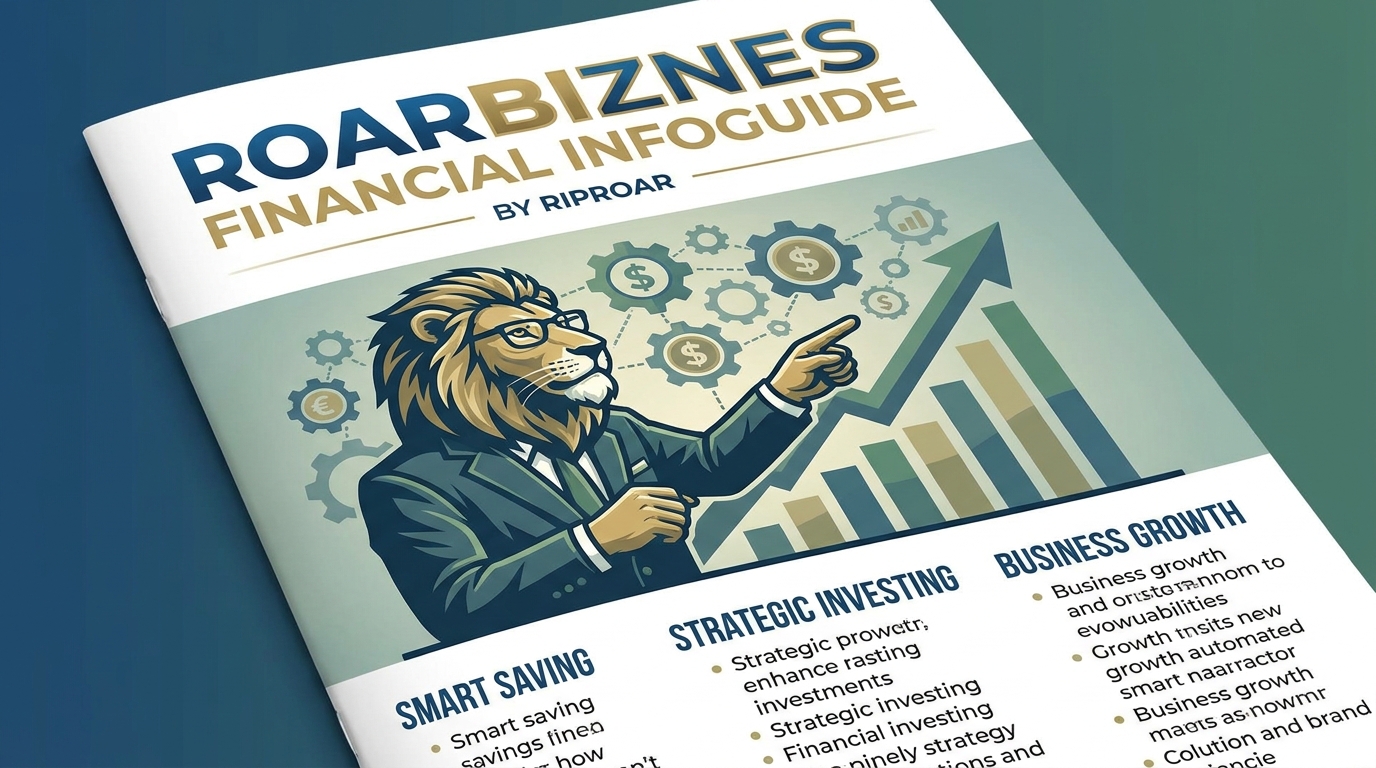
This is exactly why the Roarbiznes Financial Infoguide by Riproar has been creating quite a buzz lately. It’s not just another generic finance ebook that fills your head with theory and leaves you more confused than before. It’s a practical, no-nonsense resource designed specifically for business owners who are tired of feeling lost when it comes to money management.
I’ve spent time digging through what’s already out there on this guide, and honestly, most articles barely scratch the surface. They tell you the guide exists and give you a vague overview, but they don’t show you how to actually use it. They don’t tell you about the real-world strategies that can transform your business finances from a constant source of stress into a genuine competitive advantage.
That changes right now. In this comprehensive guide, I’m going to walk you through everything you actually need to know about the Roarbiznes Financial Infoguide by Riproar. We’ll cover the practical strategies that work, the common mistakes you need to avoid, and most importantly, how to implement these financial principles in your business starting today.
What Exactly Is the Roarbiznes Financial Infoguide by Riproar?
Before we dive into the strategies and frameworks, let’s get clear on what this guide actually is and why it matters for your business.
The Roarbiznes Financial Infoguide by Riproar is a structured financial education resource built specifically for business owners, entrepreneurs, and financial decision-makers. Think of it as your personal financial mentor that doesn’t charge by the hour and doesn’t use confusing jargon to make you feel stupid.
The creators behind Riproar understood something important. Most business owners aren’t accountants. They didn’t study finance in school. They started their businesses because they were passionate about something—a product, a service, a solution to a problem—not because they loved spreadsheets and tax calculations.
Yet somehow, these same passionate entrepreneurs are expected to manage budgets, forecast revenue, control expenses, make investment decisions, and keep their businesses financially healthy. It’s like asking someone who’s never cooked to run a five-star restaurant kitchen.
This guide bridges that gap. It takes complex financial concepts and breaks them down into simple, actionable steps that anyone can understand and apply. It doesn’t assume you already know the basics. It starts from the ground up and builds your financial knowledge systematically.
Why Financial Literacy Matters More Than Ever in 2026
I want to share something that might make you uncomfortable. The statistics on business failure are brutal, and they tell a clear story. A significant percentage of businesses don’t fail because their products were bad or their marketing was weak. They fail because of poor financial management.
This isn’t just about big businesses either. Small businesses, startups, freelancers, solopreneurs—all of them face the same financial challenges. Cash flow problems, underpricing, poor budgeting, no emergency reserves, reactive tax planning. These aren’t niche issues. They’re the everyday reality for most business owners.
The cost of financial illiteracy in business is staggering. When you don’t understand your numbers, you make decisions that cost you money without even realizing it. You underprice your services because you’re scared of losing customers, not realizing you’re slowly bankrupting yourself. You take on debt without a clear repayment plan, watching interest costs eat away at your profits month after month.
But here’s the good news. Financial literacy is something you can learn. It’s not some mysterious talent that only a few people possess. It’s a skill, and like any skill, it can be developed with the right guidance and consistent practice.
That’s where the Roarbiznes Financial Infoguide by Riproar comes in. It provides the education you need to transform your financial decision-making from guesswork to strategy.
The Real Cost of Poor Cash Flow Management
Let me paint you a picture that might feel uncomfortably familiar. You’ve had a great month. Sales are up. Customers are happy. Your revenue numbers look fantastic. But somehow, when you check your bank account, there’s barely enough to cover payroll. How is that even possible?
This is the cash flow nightmare that keeps business owners awake at night. And it’s incredibly common. In fact, most businesses that fail are profitable on paper when they go under. They die not because they weren’t making money, but because they ran out of cash to keep operating.
Understanding the difference between profit and cash flow is one of the most important financial lessons any business owner can learn. Profit is what remains after you subtract your expenses from your revenue. Cash flow is the actual movement of money in and out of your business. You can be profitable and still go broke if your cash flow is poorly managed.
The Roarbiznes Financial Infoguide tackles this head-on. Instead of just telling you to manage your cash flow better, it gives you practical systems for doing exactly that. It teaches you how to create cash flow forecasts that give you visibility into upcoming pressure points. It shows you how to improve your invoice management so you get paid faster. It provides strategies for negotiating better payment terms with suppliers.
Budgeting Strategies That Actually Work for Small Businesses
Let’s talk about budgeting for a moment. I know, I know. The word budget probably makes you want to run in the opposite direction. Most business owners treat budgeting like going to the dentist—something they know they should do but keep putting off because it’s unpleasant.
Here’s the thing, though. A budget isn’t a punishment. It’s a tool. It’s your financial roadmap. Without it, you’re driving blind, hoping you’ll somehow reach your destination without crashing.
The Roarbiznes Financial Infoguide approaches budgeting differently than the traditional, rigid methods that feel restrictive and demoralizing. Instead of locking you into fixed numbers that don’t account for the unpredictable nature of business, it provides a flexible framework that adapts as your business changes.
The guide walks you through a practical budgeting process that actually works. You start by conducting a thorough audit of your income and expenses. This isn’t just glancing at your bank statements. It’s systematically reviewing every dollar that comes in and goes out, categorizing your expenses, and identifying areas where you’re leaking money without realizing it.
Then, you create realistic revenue projections based on historical data and market research. You allocate percentages of your revenue to different expense categories, building in a contingency buffer for unexpected costs. Finally, you commit to reviewing and adjusting your budget regularly—not once a year when tax season rolls around, but monthly.
Smart Investment Decisions That Drive Business Growth
Business growth requires investment. You can’t expect to scale your business without putting money into marketing, technology, talent, or infrastructure. But investment without strategy is just gambling with your business’s future.
The Roarbiznes Financial Infoguide provides a clear framework for making smart investment decisions. Instead of throwing money at whatever seems exciting or following the latest trend, you learn how to evaluate every investment opportunity against a clear return on investment calculation.
This means understanding both the costs and the expected benefits before you commit resources. It means being realistic about timelines and risks. It means diversifying your investments so you’re not putting all your eggs in one basket.
One of the most valuable investment principles the guide teaches is this: never invest money that your business can’t afford to lose without affecting operations. This conservative approach doesn’t mean you avoid investing altogether. It means you invest intelligently, understanding that not every investment will succeed and planning accordingly.
The guide also helps you think about different types of investments and their respective risk levels. Technology investments can provide quick returns through increased efficiency. Talent investments take longer to pay off but can transform your business over time. Marketing investments are essential for growth but require careful targeting and measurement.
Essential Financial Planning and Forecasting Techniques
Strategic financial planning is what separates businesses that thrive from businesses that simply survive. It’s the difference between being reactive—constantly putting out fires and scrambling to make ends meet—and being proactive, anticipating challenges and opportunities before they arrive.
The Roarbiznes Financial Infoguide provides a comprehensive approach to financial planning that covers multiple time horizons. You start with annual planning, setting revenue targets, expense budgets, and investment goals for the full year. Then you break that down into quarterly reviews where you assess your performance and adjust your strategies based on what’s actually happening.
Monthly monitoring keeps you on track, comparing your actual performance against projections and identifying variances that need attention. And weekly cash flow checks ensure you always know exactly where your business stands, with no unpleasant surprises.
The guide also introduces you to scenario planning, which is crucial for navigating uncertainty. Instead of creating a single forecast and hoping it comes true, you develop multiple scenarios—conservative, moderate, and optimistic. This prepares you for different outcomes and allows you to respond quickly as conditions evolve.
How to Build a Financially Robust Business
Financial robustness is one of those terms that sounds fancy but is actually quite simple. It means your business can withstand shocks. It means you can lose a major client, face unexpected costs, or go through an economic downturn without collapsing.
Building financial robustness isn’t about being wealthy. It’s about being resilient. And resilience comes from having systems and structures in place that protect your business when things go wrong.
The Roarbiznes Financial Infoguide provides a practical framework for building financial robustness into your business structure. The first step is building an emergency reserve. Three to six months of operating expenses set aside in a dedicated account gives you a safety net that protects your business during difficult periods.
The second step is diversifying your revenue streams. Relying on a single client, product, or channel creates existential risk. If something happens to that one source of income, your entire business is threatened. Developing multiple revenue sources creates stability and reduces vulnerability.
The third step is systematizing your financial monitoring. Regular financial reviews—weekly, monthly, and quarterly—ensure you identify problems early and can respond before they become crises. This isn’t about micromanaging every dollar. It’s about having visibility into your financial health so you can make informed decisions.
Common Financial Mistakes That Cost Businesses Dearly
Even experienced business owners make financial mistakes. The key is learning from those mistakes and, ideally, avoiding them altogether.
One of the most common and damaging mistakes is underpricing. Many business owners set their prices based on what competitors charge or what they think customers will accept, without considering their true costs and desired profit margins. This is a recipe for burnout. You work harder and harder, but your profits never seem to grow.
Another frequent error is mixing personal and business finances. This creates legal risk, tax complications, and financial confusion. It makes it impossible to know how your business is really performing and creates problems when you need to demonstrate your financial position to banks, investors, or partners.
Ignoring cash flow in favor of focusing on profit is another costly mistake. Profit means nothing if cash isn’t available when you need it. Many businesses that look profitable on paper struggle because they can’t convert their sales into actual cash quickly enough.
Operating without a financial reserve leaves your business completely vulnerable. Unexpected expenses are inevitable. Equipment breaks, clients pay late, economic conditions change. Without a reserve, these normal business challenges become existential crises.
Reactive tax planning is another issue that costs businesses unnecessarily. Waiting until tax season to think about tax strategy is like waiting until exam day to start studying. You’re forced into rushed decisions that often cost you more than necessary.
The Future of Financial Management: Fintech and Beyond
Technology is transforming business finance in ways that would have seemed impossible just a few years ago. AI-powered accounting and forecasting tools are generating real-time financial insights without manual data entry. Real-time financial dashboards provide live visibility into key metrics from a single integrated platform.
Integrated tax planning technology calculates and plans tax obligations automatically as transactions occur. Blockchain-based financial transparency creates immutable transaction records that increase trust and reduce fraud risk.
The Roarbiznes Financial Infoguide positions itself to help business owners navigate this evolving landscape. It builds the financial literacy foundation needed to use advanced tools effectively. It instills financial habits and disciplines that remain valuable regardless of the tools available.
The frameworks provided are flexible enough to adapt as financial technology and regulation evolve. By creating a culture of financial awareness, the guide drives better decisions at every level of your organization.
Financial KPIs That Actually Matter for Business Success
Understanding your financial KPIs (Key Performance Indicators) is essential for making informed business decisions. But with so many metrics available, it’s easy to get overwhelmed or focus on the wrong numbers.
The Roarbiznes Financial Infoguide helps you identify and track the KPIs that actually matter for your business. Monthly recurring revenue is critical for subscription or retainer-based businesses. Gross profit margin and net profit margin provide insight into your operational efficiency and pricing strategy.
Customer acquisition cost and customer lifetime value ratio helps you understand whether your marketing efforts are sustainable. Operating expense ratio as a percentage of total revenue shows how efficiently you’re managing your costs. Days sales outstanding measures how quickly you’re collecting payments from customers.
By tracking these KPIs consistently and understanding what they tell you about your business performance, you can make better decisions and identify problems before they become serious.
Check: ETSJavaApp Release Date 2026 Latest
How to Start Your Financial Transformation Today
Taking the first step toward better financial management doesn’t require a complete business overhaul. Small, consistent improvements compound over time into transformational business outcomes.
Start by conducting a financial vulnerability audit. Identify where your business is most exposed to financial risk. Is it your reliance on a single client? Your lack of cash reserves? Your weak invoice management system? Understanding your vulnerabilities is the first step toward addressing them.
Next, pick one area to focus on and create a plan. Maybe it’s building your emergency reserve or improving your cash flow forecasting or creating a proper budget. Choose something manageable and commit to taking action.
Then, systematize your financial monitoring. Set up a weekly check-in on your cash position. Schedule monthly financial reviews. These habits don’t take much time but provide enormous clarity and control.
Finally, invest in your financial education. This is the most important investment you can make in your business. Understanding your numbers, making smart decisions, and building a financially resilient business isn’t something that happens by accident. It’s the result of intentional learning and consistent practice.
Conclusion
Financial success in business rarely happens by accident. It’s the result of informed decisions, consistent planning, disciplined habits, and ongoing learning. The Roarbiznes Financial Infoguide by Riproar provides the knowledge, tools, and frameworks you need to build a financially resilient business that can thrive in any environment.
The journey to financial mastery begins with a single step. Whether you’re starting a new business, struggling with cash flow, or looking to scale your operations, the principles and strategies in this guide can transform your financial future. Financial knowledge is a competitive advantage, and the best time to develop it is right now.
Remember that small, consistent improvements compound into transformational business outcomes. The financial habits you build today will determine your business’s success tomorrow. By investing in your financial education and implementing the strategies outlined in this guide, you’re making a commitment to your business’s long-term prosperity.
The Roarbiznes Financial Infoguide by Riproar is more than just a resource. It’s a roadmap to financial confidence and business success. Take action today. Build your financial robustness. Create the business future you deserve.